AWS vs Azure vs Google Cloud: Choosing the Right Platform
Evaluate AWS, Microsoft Azure, and Google Cloud Platform across compute performance, managed database capabilities, enterprise security, pricing models, and AI ecosystems. Make an informed architectural decision tailored to your organization's compliance and operational requirements.
Cloud Solution Lyne Team
Enterprise Solutions Architect
Selecting the foundational cloud hyperscaler for your product is one of the most consequential architectural decisions an engineering leadership team can make. While Amazon Web Services (AWS), Microsoft Azure, and Google Cloud Platform (GCP) offer overlapping feature sets, each brings distinct competitive advantages, enterprise integrations, and specialized tooling.
Amazon Web Services (AWS): Unmatched Breadth & Maturity
As the pioneer of cloud computing, AWS boasts the largest marketplace ecosystem, the most extensive global infrastructure footprint, and the deepest catalog of specialized managed services (from DynamoDB and Aurora Serverless to ECS and Lambda). AWS is the natural choice for startups seeking rapid velocity and enterprises requiring niche hardware or battle-tested global scalability.
Microsoft Azure: The Enterprise & Hybrid Leader
For organizations deeply invested in the Microsoft software stack—Active Directory, Windows Server, Microsoft 365, and SQL Server—Azure provides seamless hybrid connectivity, Azure Arc management, and lucrative enterprise license mobility discounts. Azure's OpenAI service integration also makes it an attractive destination for generative AI applications.
Google Cloud (GCP): Data Analytics, Kubernetes & AI
GCP stands out in three critical domains: data analytics (BigQuery is widely considered the premier serverless analytical data warehouse), native container orchestration (Google Kubernetes Engine is the gold standard for K8s manageability), and advanced AI/ML infrastructure with custom TPU silicon and Vertex AI.
Comparative Summary
- Best for Broad Ecosystem & Startups: AWS (IAM depth, documentation, global talent pool)
- Best for Existing Microsoft Enterprises: Azure (Active Directory, hybrid cloud, Azure Arc)
- Best for Big Data, ML & Kubernetes: Google Cloud (BigQuery, GKE, Vertex AI)
- Multi-Cloud Trend: Increasingly, organizations adopt a primary hyperscaler while utilizing secondary cloud services for distinct disaster recovery or specialized data workloads.
Related Topics & Cloud Technologies
Related Cloud Architecture Articles
More insights and deep dives in AWS, Azure and Google Cloud

Why Use Terraform for Cloud Infrastructure Automation?
Discover why Infrastructure as Code with HashiCorp Terraform is the industry benchmark for multi-cloud automation. Learn how declarative syntax, state management, modular architectures, and safe dry-run planning eliminate human error and accelerate reliable deployments across AWS, Azure, and Google Cloud.

Kubernetes Best Practices for Production Environments
Operating Kubernetes in high-scale production requires more than default manifests. Master cluster hardening, resource requests and limits, Pod Disruption Budgets, Horizontal Pod Autoscaling, network policies, and secrets encryption to achieve 99.99% workload uptime.
5 Strategies for Cloud Cost Optimization
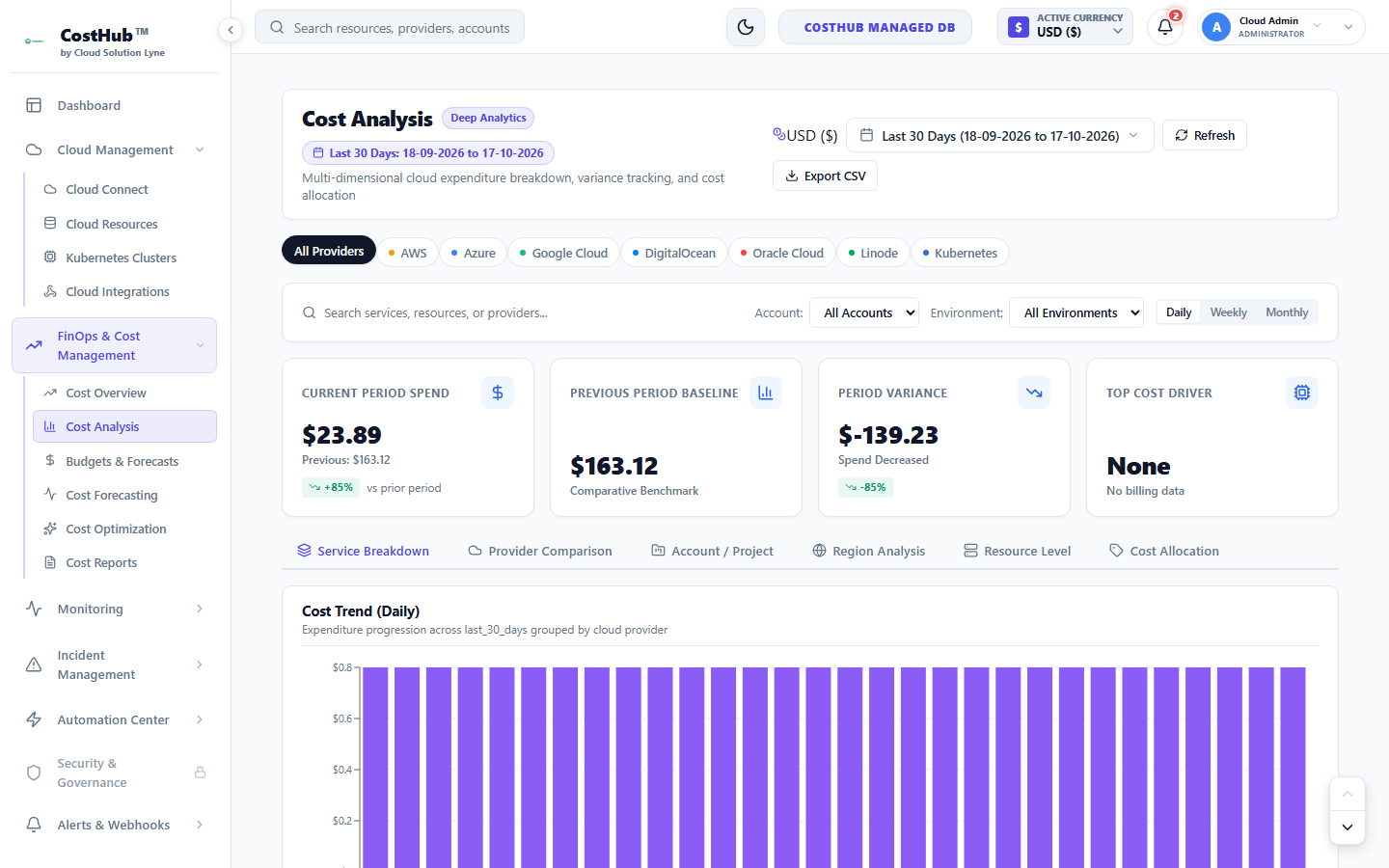
Uncontrolled cloud spending rapidly erodes engineering margins. Discover five battle-tested FinOps strategies: intelligent workload right-sizing, automated idle resource reclamation, commitment savings plans, storage tier lifecycles, and real-time anomaly alerting to reduce spend by 30-45%.