Docker Containerization Best Practices
Transform bloated, insecure container images into lean, lightning-fast artifacts. Learn multi-stage build patterns, non-root user enforcement, minimal base image selection with Alpine or Distroless, Docker caching mechanics, and automated vulnerability scanning with Trivy.
Cloud Solution Lyne Team
Containerization Specialist
Docker revolutionized how applications are packaged and shipped. However, unoptimized Dockerfiles frequently result in multi-gigabyte images, slow build pipelines, bloated disk consumption, and dangerous security vulnerabilities inherited from unnecessary operating system utilities.
The Gold Standard: Multi-Stage Node.js Dockerfile
Multi-stage builds allow you to isolate build-time dependencies (compilers, npm tooling, TypeScript packages) from the lightweight runtime image shipped to production.
# Stage 1: Build & Bundle
FROM node:20-alpine AS builder
WORKDIR /app
COPY package*.json ./
RUN npm ci --prefer-offline
COPY . .
RUN npm run build

# Stage 2: Minimal Production Runtime
FROM node:20-alpine AS runner
WORKDIR /app
ENV NODE_ENV=production

# Security: Never execute as root in production
RUN addgroup -S appgroup && adduser -S appuser -G appgroup
USER appuser

COPY --chown=appuser:appgroup package*.json ./
RUN npm ci --only=production && npm cache clean --force
COPY --chown=appuser:appgroup --from=builder /app/dist ./dist

EXPOSE 8080
HEALTHCHECK --interval=30s --timeout=5s --start-period=5s --retries=3 \
  CMD wget --spider http://127.0.0.1:8080/health || exit 1

CMD ["node", "dist/server.js"]
Essential Rules for Production Containers
- Always specify explicit image tags: Never use 'latest' in production manifests to ensure deterministic, reproducible rollouts.
- Leverage .dockerignore: Prevent .git, node_modules, local .env files, and test caches from leaking into build contexts.
- Run as an unprivileged user: Protect host kernels from privilege escalation by declaring 'USER 10001' or a dedicated non-root account.
- Continuous Vulnerability Auditing: Integrate Trivy or Docker Scout into CI pipelines to reject images with critical CVEs.
Related Topics & Cloud Technologies
Related Cloud Architecture Articles
More insights and deep dives in Kubernetes and Docker
Kubernetes Best Practices for Production Environments
Operating Kubernetes in high-scale production requires more than default manifests. Master cluster hardening, resource requests and limits, Pod Disruption Budgets, Horizontal Pod Autoscaling, network policies, and secrets encryption to achieve 99.99% workload uptime.
Kubernetes vs Docker: Understanding the Difference
Clarify the common confusion between container runtimes and container orchestration platforms. Discover how Docker and Kubernetes complement rather than compete with one another, and determine when simple container runtimes suffice versus when Kubernetes is necessary.
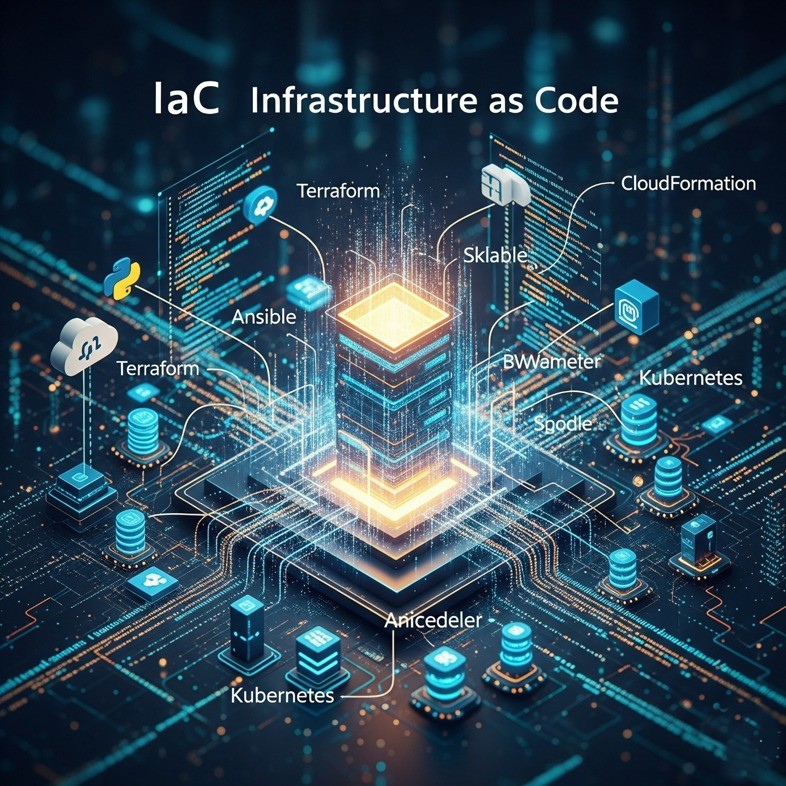
Why Use Terraform for Cloud Infrastructure Automation?
Discover why Infrastructure as Code with HashiCorp Terraform is the industry benchmark for multi-cloud automation. Learn how declarative syntax, state management, modular architectures, and safe dry-run planning eliminate human error and accelerate reliable deployments across AWS, Azure, and Google Cloud.